
A development team can follow strict coding guidelines, keep dependents up to date, yet release a vulnerability to the public that nobody notices. In reality, attacks don’t adhere to an audit list. An attacker may blend a weak authorization and an exposed API or a workflow for password reset, or discover that data from one tenant could be used by a different.
Businesses in Brisbane make use of penetration testing experts to ensure security. They look at systems through the adversarial lens. Instead of asking whether security measures are in place, experienced testers investigate whether the controls are actually possible to bypass.
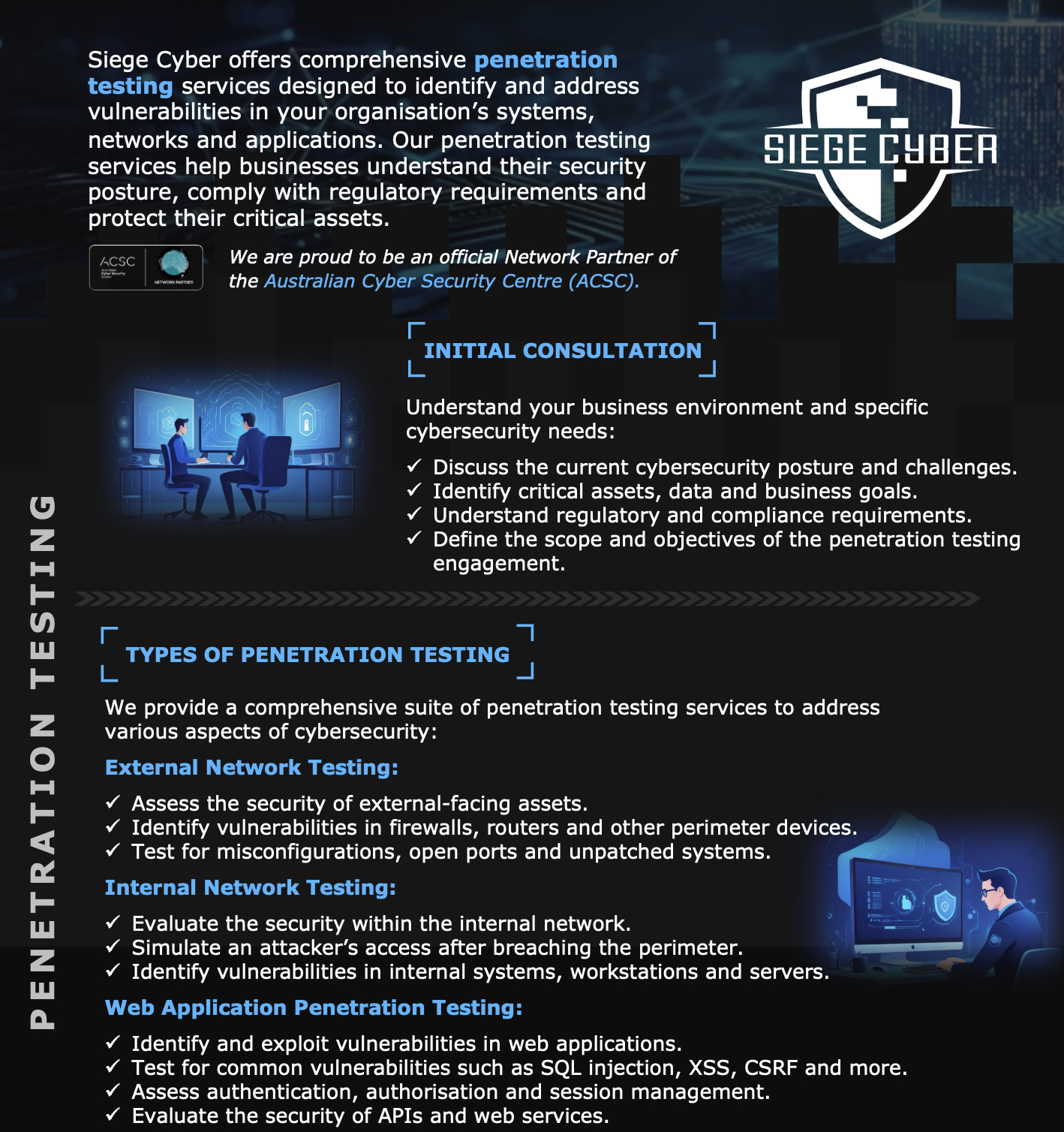
For Australian businesses that handle customer data and financial data, as well as healthcare records, or other sensitive assets, that difference matters.
Scanning using automated methods only tells a part of the truth
Vulnerability scanners are useful. They can identify old software, unsecure headers, and CVEs as well obvious issues with configuration. However, they are unable to grasp how an application behaves.
Imagine a site for customers that allows them to view invoices of a different company and change their account numbers. A scanner might not find something unusual when the server provides perfectly valid results. Human testers can detect the problem with authorization in a flash.
Automated web penetration testing combined with manual analysis is the most effective way to ensure the highest quality test. Testers search for weaknesses in session and authentication API behavior and configuration, and access control and injection risk API behavior.
SaaS environments pose their own security concerns
Cloud applications that are multi-tenant require careful testing because one mistake can affect many customers at the same time.
Effective Saas penetration testing must focus on tenant isolation, privilege functions, API authorization, role changes, account recovery, data exposure as well as integrations with external services. The tester needs to not just know if the feature is working but also if it is able to be altered to a degree the team developing it could not have intended.
A user, for instance, assigned a basic role might not recognize an administrative function in the interface. However, this doesn’t mean that the API does not allow them to making calls directly. Making that distinction requires constant testing instead of simply looking at what is displayed on the screen.
Modern web applications offer more attack surfaces
Applications today typically combine JavaScript front-ends and APIs cloud service providers Identity providers, microservices and other services. An issue could exist within any one of these components or the trust relationship between them.
Thorough web app penetration testing follows those connections. The testers will be able to examine the way tokens and authorization are handled, whether secure servers follow the same rules as well as how data moves between the services of users, and if a flaw that appears to be low risk may be linked to another vulnerability that could lead to a significant attack.
Siege Cyber specializes in this type of testing of applications and works with modern frameworks, APIs, cloud-hosted systems and advanced application architectures instead of treating every site as a list of URLs that need to be scanned.
The report will aid developers find a solution to the issue.
In the end, finding vulnerabilities is only half the job. The most beneficial security testing happens when engineers can replicate and understand the problem, and then take steps to mitigate the risks.
Siege Cyber’s reports include information on evidence of reproducible steps in risk assessments, impacts analysis, and practical remediation. The executive description of the risk provided to business stakeholders and technicians receive the specifics needed to solve it. Important findings can be raised during the engagement rather than waiting for the final report.
After the remediation, retesting provides an extra layer of protection by ensuring that the original flaw has been corrected and not causing a fresh vulnerability.
Organisations that want independent validation, evidence of compliance, or a boost in confidence before a release could benefit from penetration testing. It offers a secure environment in which to test how an attacker who is skilled could be able to attack the system. Finding the answer before a real adversary has a chance to do so is what makes this exercise important.